Best Way to Upload Mix to Landr
LANDR has been around for a while now, and I finally decided to endeavour information technology out for myself. I recently mastered a rail I produced a while ago, a bad idea, I know. I put the track to residual for a calendar month, and so I could master it with fresh ears because I didn't have the upkeep to hire a mastering engineer. It worked out all right, merely I was curious how a service similar LANDR would handle it.
So I signed upward for a free account on LANDR.com and uploaded my track. It'southward an electronic progressive house track which I mixed with plenty of headroom (10dB) left for mastering. LANDR allows you to master 2 tracks for free each calendar month. The free version generates a 192kbps mp3 file and doesn't provide y'all with extra mastering options, only information technology's a good way to test out the service.
I was surprised
I have to say I was surprised by the issue! It did a much better job than I initially idea was possible for an automated mastering service. The LANDR version had much more touch on and depression end than my own master. It really put an extra layer of quality on meridian and I was actually disappointed about the quality of my ain self-mastered version.
The LANDR master had more punch and clarity in the high end and when comparing the two versions I noticed my own master had some dirty frequencies left that were gone in LANDR's version. So in terms of quality I think it did a great chore. And I just tested this with the free version.
LANDR has three dissimilar paid plans that give you access to additional features. In add-on to this monthly or annual fee you all the same have to pay per track, but this amount is discounted according to the programme y'all have. The Pro plan, however, allows you to employ unlimited high quality, 24-bit Wav files, without paying per individual track. I will review the paid plans in a characteristic commodity.
So how does it piece of work?
I have heard about LANDR for a while now and since the increasing interest in artificial intelligence and motorcar learning an automated mastering service was inevitable. The concept of motorcar learning is pretty simple. You lot create an algorithm that analyses lots of tracks in ane specific genre. Data such as, loudness, tonal balance and stereo width tin be easily measured. Thousands of tracks are analysed and an average is created that is applied to those tracks you lot upload.
The hard role is programming an algorithm that works with every possible mix without human interaction. I actually asked LANDR if they could provide me with some information about the algorithm and they were kind enough to respond with the post-obit:
"LANDR has been developed and improved over the years to understand how to best treat your music past making subtle mastering decisions that are appropriate for the genre of your track and by identifying audio features that are most important. Our AI identifies the genre-specific features and compares them beyond a big number of tracks, making decisions almost EQ, stereo width, compression, tone, saturation, loudness, that will make information technology stand out and be perfect for the style of music. These changes can be small or big, depending on your mix. We besides have identified variations in aesthetics for each genre that can modify the experience and emotional impact, with our mastering styles preferences."
LANDR.com
Technical Comparison
Loudness
My unmastered track peaked at -10.07dB while my integrated loudness was around -26.3 LUFS. To learn more about LUFS check out this video by mastering engineer Ian Shepherd.
Considering Spotify normalizes music to -14 LUFS, annihilation louder than that wouldn't make much sense as it volition be turned downwardly automatically. This loudness standard is used to bring an end to the loudness state of war. My self-mastered runway ended up at -13.iii LUFS which helped preserve some dynamics. The master past LANDR concluded upward at -10.7 LUFS which is a footling loud for my sense of taste just it's not too bad, considering we're talking about electronic music here.
| Spec. | Unmastered | Cocky Mastered | LANDR |
| True Peak Level | -10.07 dB | -1.01 dB | +0.84 dB |
| Integrated Loudness | -26.3 LUFS | -xiii.three LUFS | -10.7 LUFS |
If we take a await at the true summit level, however, there is a problem. Nosotros all know that 0dBFS is the limit of digital audio. Nasty clipping occurs if yous cross this threshold. Only even though your summit meter might be displaying 0dBFS, clipping tin still occur. This is because digital sound needs to be converted back to analog to exist able to hear information technology through speakers or headphones. During this DA conversion process, filters are used to turn a stepped digital wave into a smooth analog one. This process takes up headroom, still, which can crusade inter-sample peaks. Check out this commodity by protools expert to acquire more nearly true peak levels.
Loftier-quality DA converters might exist able to handle this problem, but virtually consumers listen to music on their phones and laptops which often take inexpensive converters. Spotify has the following recommendations about loudness and true-peak levels:
Mastering tips for Spotify
"Target the loudness level of your master at -xiv dB integrated LUFS and go on information technology beneath -1 dB TP (Truthful Peak) max. This is best for the lossy formats we employ (Ogg/Vorbis and AAC) and will ensure no extra baloney is introduced in the transcoding procedure.
If your master is louder than -fourteen dB integrated LUFS, make sure it stays below -2 dB TP (True Peak) max to avoid extra distortion. This is because louder tracks are more susceptible to extra baloney in the transcoding process."
Every bit constitute on the spotify site itself.
My master is a little louder than -fourteen LUFS and should technically have a lower true peak level to business relationship for the conversion process. But because virtually LUFS meters have an accuracy of +/- 1dB this is adequate. The LANDR master, however, peaks at +0.84dB while having a loudness of -10.7 LUFS thus having a true tiptop level well-nigh 3dB higher than recommended. A possible culprit may lie in the mp3 conversion process.
I contacted LANDR about this and they recommended using a LOW-intensity level. In that location are 3 loudness intensities you can choose: low, medium, and high. I thought this was a premium-only option at first simply you can alter these settings with the free version also. The low-intensity version turned out to accept an integrated loudness level of -12.9LUFS (a tiny bit louder than my own primary) with a true height level of +0.56dB.
This true pinnacle level is still above the -2dB that Spotify recommends. LANDR's recommendation was to just employ the master that sounds best for the music. They did tell me they are currently working on additional options to exist more than compliant with streaming and encoding standards. That's a expert decision because I don't think streaming will go abroad anytime before long.
Just because I was curious nearly true peak levels of other professionally mastered tracks I compared 1 track that was mastered a while back for a CD release and one track that was recently released for digital media. Y'all tin encounter the difference even past looking at the waveforms. The CD version peaked at 0.00dB with truthful peaks levels at +1,02dB. The digital release peaked at -0.40dB with truthful peak levels at -0,26dB.
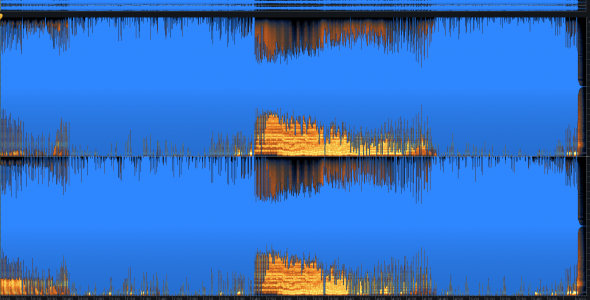
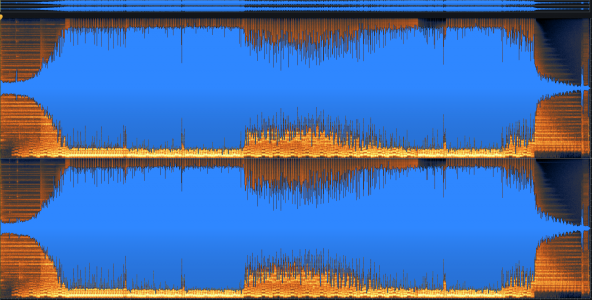
I do like to be on the safe side myself, but to be honest, I accept never heard the artifacts produced by positive true peak levels. Most mod DA converters can probably handle these true peak levels perfectly fine. And just like everything in sound. If information technology sounds proficient it is good.
Stereo Width
In my cocky-mastered version, I used a stereo enhancer to widen the stereo field a bit. By looking at the correlation meter in the complimentary SPAN analyzer my version provided a footling fleck more width than LANDR'due south version. I don't think they actually enhanced the width because information technology was similar to the original version. This probably depends on the genre, electronic music doesn't have much stereo width anyways so the algorithm didn't find it necessary to increase the width.
Tone
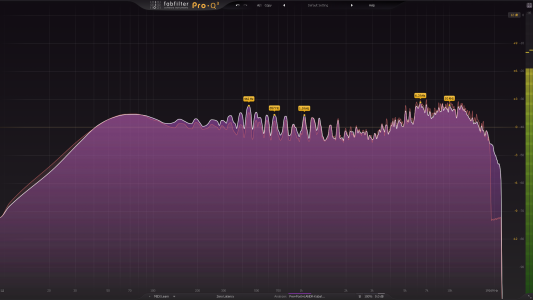
LANDR clearly boosted the depression stop to give more power to the kick and bass with an additional boost in the college frequency area. By comparison the spectrum plots in Fabfilter'south Pro Q3 at equal loudness levels I didn't see big changes, however. I used the peak freeze mode in the epitome below, which indicates static EQ differences. The LANDR version is indicated by the red line. Y'all can come across a slight dip in the mid-ring and a rather steep, well-nigh brick wall-like, low laissez passer filter at 19kHz. This steep filter at 19kHz is most probable due to the mp3 format. That's ane of the reasons not to utilise mp3'south folks!
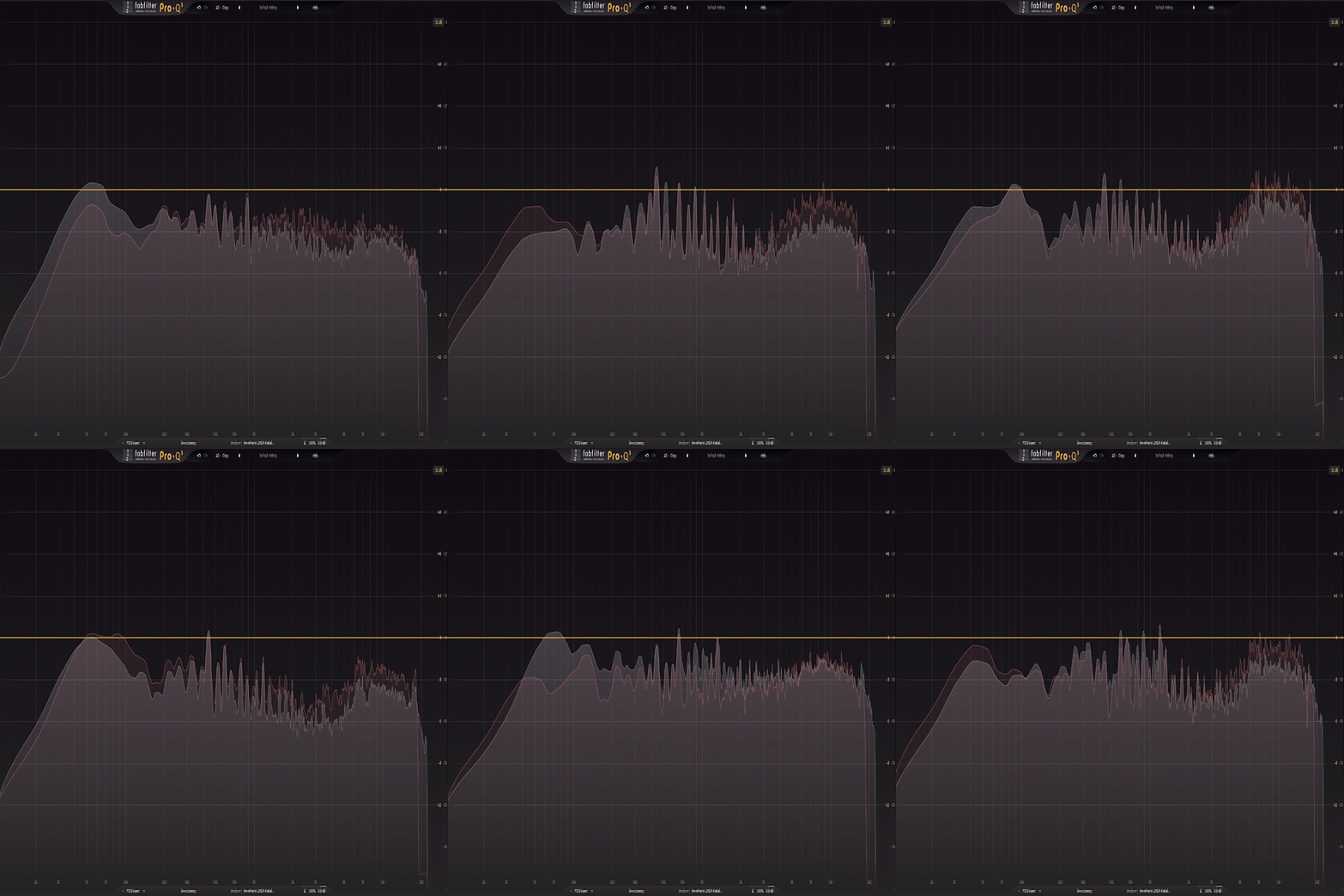
When we turn off peak-hold and alter the spectrum plot response to fast, we can see that there is definitely some dynamic EQ action existence used here. The boot is beingness boosted when played and attenuated in between, the same is true for the high hats. This adds punch without unnecessary clutter.
Compression
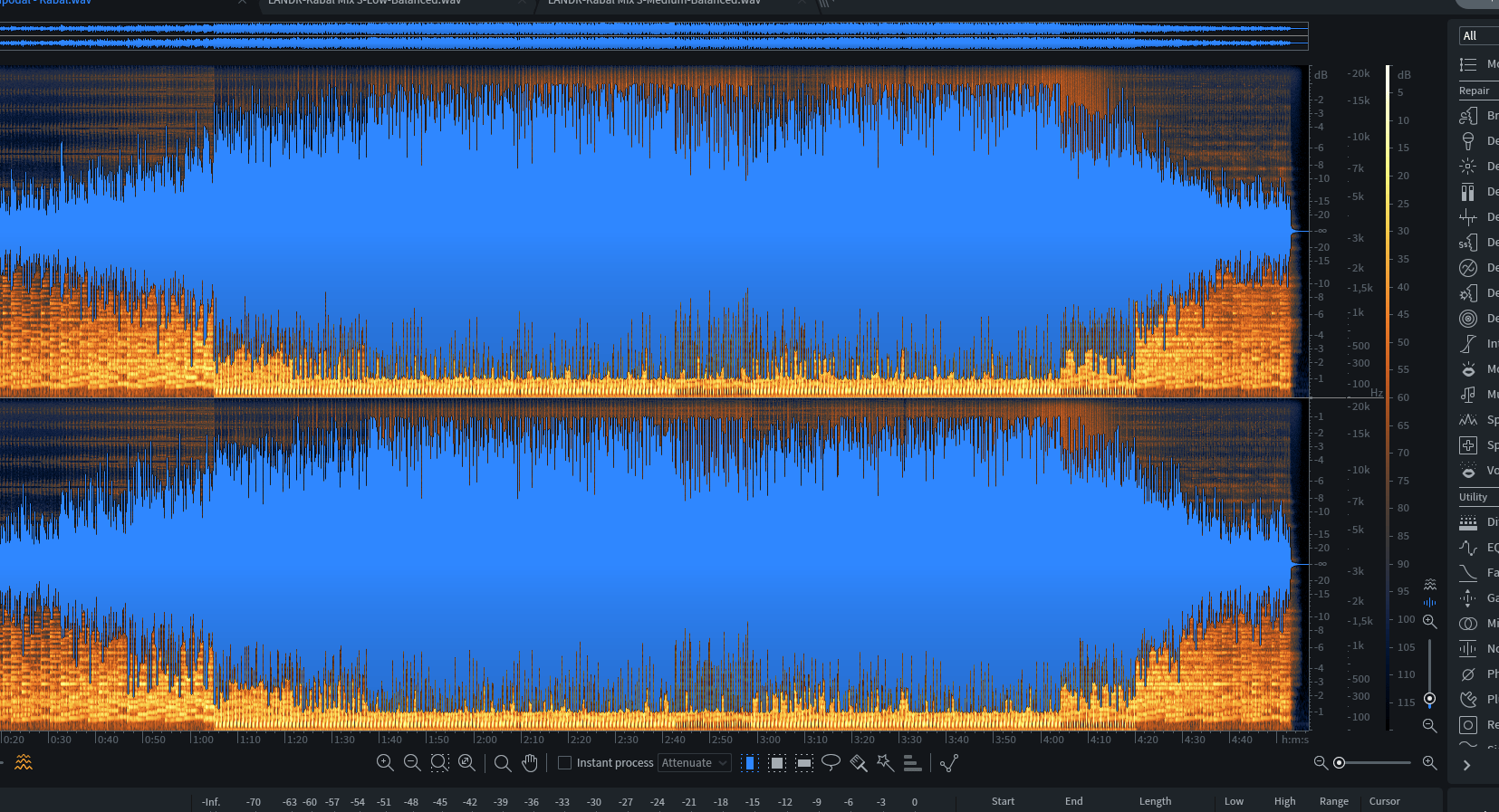
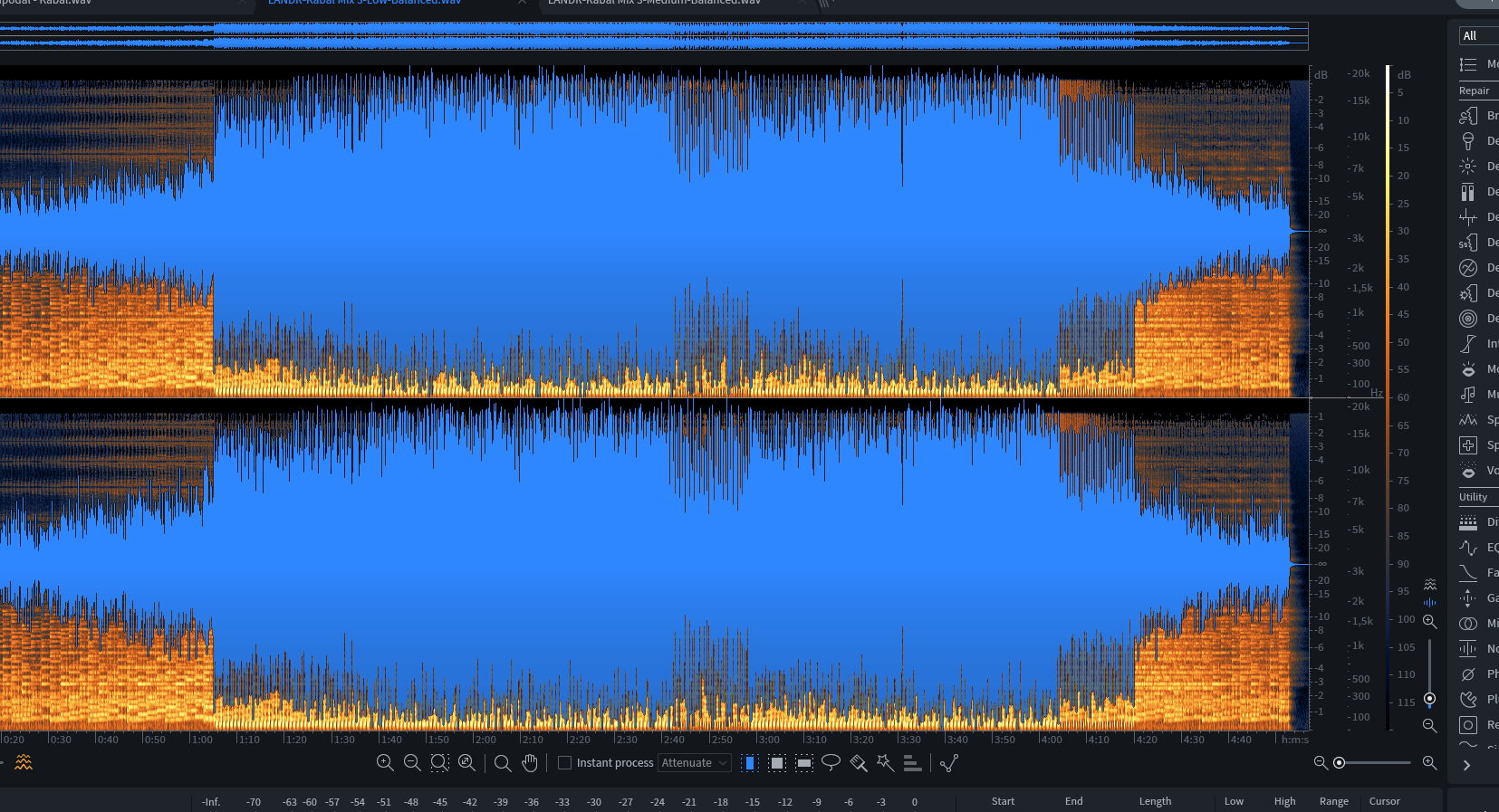
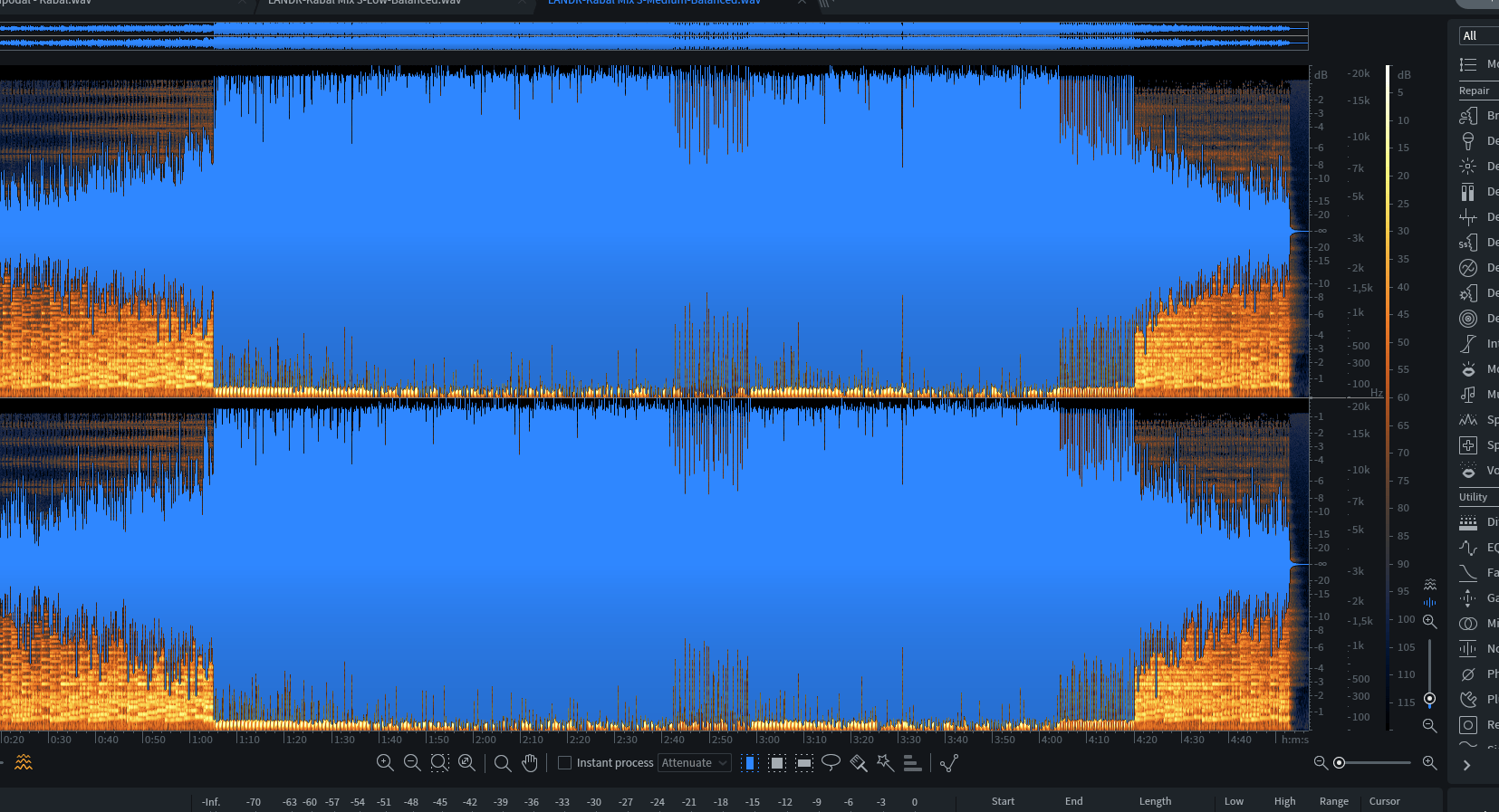
My mix was pretty dynamic, so some compression is needed to achieve college loudness levels. You can see the difference in the images below. Compression is used to enhance transients, every bit you can see in the low-intensity version. The peaks are louder than in my self-mastered track which results in a more than defined attack to the drum sound. The medium intensity master does use quite a scrap of limiting, however.
Would I employ LANDR for all my tracks?
I actually am impressed by the quality level that LANDR produces. And I am definitely interested in using this platform more often especially now that I'g releasing more songs for various projects. I do have to test the platform with other genres though.
LANDR asks €17.99 for a high-quality 24-bit WAV version per rail in improver to the advanced subscription. If you were to release 4 tracks a year this would cost you lot €180,-. This is actually the same price you would pay for a decent mastering engineer which asks €45 per track. If I were to release ane EP per year I would rather go to a mastering engineer.
Simply since I produce music for various media such as moving picture, advertisement, ghost product it may be better to go for the Pro subscription which costs €299 per year and allows me to master unlimited high-quality Wavs with no additional price per track. I would only need to release vii tracks per year to save coin on a real mastering engineer so for me this subscription makes sense. Just this all depends on your individual needs of course.
Do I ever need a real mastering engineer once more?
While AI mastering has its benefits like cost, and ease of use, I wouldn't say mastering engineers need to worry most losing their job. There are still lots of reasons to rent a professional person mastering engineer.
LANDR currently only works on singles which is fine for today's streaming market, but if you need to master a whole anthology with relative loudness levels between tracks including fades, pauses, and markers so AI mastering notwithstanding has a long way to go. A real mastering engineer would do a quality pass, checking for noises, pops, and clicks that need to be fixed with specialized tools. Professional person mastering engineers tin can provide you lot with the right files for cd, DVD, streaming, vinyl, environment, and any other formats that y'all wish to distribute your music in.
Mastering engineers use analog equipment and make decisions on emotions instead of algorithms. The danger in using algorithms is that it can consequence in average sounding masters. A mastering engineer can retrieve out of the box which a calculator plan can not. Y'all can provide a mastering engineer with feedback and he can give you tips to improve your mix in return. Yous can attend a mastering session and mind to your track in an acoustically treated room with high-quality monitors. Yous'll learn a lot by just visiting a mastering engineer from time to time.
In Summary
Mastering yourself is something you want to forestall at all times. Even mixing your ain tracks can be difficult, because you lot lose objectivity the longer y'all piece of work on a project. LANDR is a expert alternative for mastering your own tracks with surprisingly expert results.
I would withal go to a real mastering engineer to master my EP's or Albums, simply for single releases, LANDR is a great solution!
Source: https://www.optoproductions.com/mastering-with-landr-vs-mastering-myself/
0 Response to "Best Way to Upload Mix to Landr"
Post a Comment